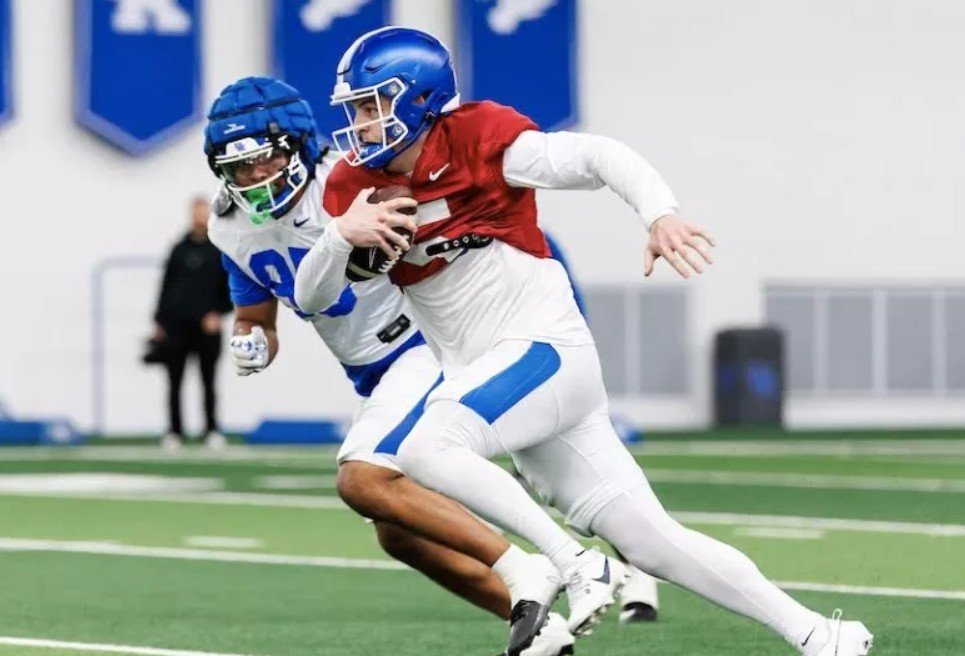
Forget the highlight reels and the final scores for a moment. To truly understand why games are won and lost, you need to dive into the intricate world of Key Player Matchups & Roster Analysis. This isn't just about identifying the star players; it's about dissecting how individual talents clash, how team schemes exploit or neutralize, and how every single player on a roster contributes to the grand strategic tapestry of a competition. It’s the difference between merely watching a game and truly seeing it.
At a Glance: Decoding the Game Before It Begins
- Rosters aren't static: Formations, individual player strategies, and tactical shifts constantly evolve, making dynamic analysis crucial.
- Micro-battles matter: The outcome of specific player-on-player matchups often dictates the larger game flow.
- Beyond the field: Factors like team form, injuries, and home advantage significantly influence strategic choices.
- Data is power: Advanced tools leverage machine learning and deep data to provide predictive, actionable insights.
- Your analytical edge: With a structured approach, anyone can sharpen their eye for identifying crucial matchups and understanding their impact.
The Unseen Game: Why Matchups & Roster Analysis Dominate Strategy
In competitive sports, the difference between victory and defeat often hinges on a razor-thin margin. Coaches and analysts don't just pick the "best" players; they craft a lineup designed to maximize their team's strengths while ruthlessly exploiting the opponent's weaknesses. This involves a deep, often obsessive, analysis of their own roster and that of their adversary.
Imagine a game of chess played with human pieces. Every player has unique capabilities, and their position, role, and interaction with opponents are meticulously calculated. This is the essence of match lineup analysis—a critical discipline for predicting game outcomes, informing betting strategies, and enhancing the enjoyment of any true sports fan. It’s about understanding the "why" behind every pass, tackle, shot, or play call.
Deconstructing the Roster: Beyond the Starting XI
A roster is more than a list of names; it's a dynamic puzzle with pieces that can be arranged in countless ways. Understanding the fundamental building blocks of roster construction and how they interact is your first step.
Understanding Formations and Their Philosophy
The chosen formation is the strategic blueprint for a team. It dictates where players position themselves, their primary responsibilities, and the overall balance between offense and defense.
- The Balanced Approach: 4-4-2 (Soccer): This classic formation offers robust symmetry. With four defenders, four midfielders, and two forwards, it provides a strong defensive base while offering versatile attacking options through the wings and central midfield. It’s adaptable and allows for various tactical interpretations, making it a reliable choice for many teams.
- Aggressive Defense: 3-4 Defense (American Football): In football, a 3-4 defense prioritizes pass-rushing and versatile linebacker play. With three defensive linemen disrupting the offensive line and four linebackers who can rush the passer, drop into coverage, or stop the run, it's particularly effective against diverse offensive threats and teams that rely heavily on passing. Its effectiveness hinges on having strong, athletic linebackers capable of multiple roles.
These are just two examples, but every sport and every team has its preferred structures, each with inherent strengths and vulnerabilities. Knowing the formation is like knowing the opponent’s default battle plan.
Individual Brilliance: Offensive & Defensive Player Archetypes
Beyond the formation, individual players adopt specific roles that define their contribution. Recognizing these archetypes helps you predict their actions and impact.
- The Offensive Spearhead: Target Man (Soccer): Often playing in formations like a 4-2-3-1, the target man is typically a tall, strong forward whose primary role is to hold up play, receive long balls, and bring smaller, faster attackers into the game. Their ability to shield the ball and distribute effectively can be crucial for offensive rhythm.
- The Orchestrator: Playmaker (Various Sports): Whether a central midfielder in soccer, a point guard in basketball, or a quarterback in American football, the playmaker is the creative hub. They orchestrate offensive plays, distributing passes, setting up opportunities, and often dictating the tempo of the game. Neutralizing the opponent's playmaker is often a top defensive priority.
- The Shadow: Man-Marking (Defense): This defensive strategy involves assigning a defender to closely follow a specific opponent, aiming to neutralize their threat entirely. It requires discipline, stamina, and a deep understanding of the marked player's tendencies. When executed well, it can completely take an opposing star out of the game.
- The Collective Shield: Zone Defense (Defense): Instead of focusing on individual opponents, zone defense emphasizes covering specific areas of the field. This allows for greater flexibility, easier communication, and often better support against dynamic offenses that rely on movement and interchanging positions. It requires players to understand their spatial responsibilities and communicate effectively to pass off threats.
The Chessboard of Competition: Pitting Strengths Against Weaknesses
The real magic of analysis happens when you start to connect the dots between individual roles and the direct confrontations on the field. These are the matchups that often swing momentum and determine the final score.
Micro-Battles That Decide Games
- Striker vs. Central Defender: This is a primal battle of skill, speed, and physicality. Can the striker create space, finish chances, or hold off the defender to link up play? Can the defender anticipate runs, win aerial duels, and prevent goal-scoring opportunities? The outcome of this duel is pivotal for goal-scoring and often directly impacts the scoreboard.
- Midfield Playmaker vs. Defensive Midfielder: This clash is all about control. The playmaker aims to dictate the game's tempo, create chances, and distribute the ball effectively. The defensive midfielder's job is to disrupt this flow, intercept passes, win possession, and prevent the playmaker from influencing the game. Whoever wins this midfield battle often dictates the game's overall rhythm and possession.
Tactical Shifts: The Art of In-Game Adjustment
No game plan survives first contact with the enemy. Great coaches and teams are masters of adaptation, making tactical shifts that can completely change the dynamic of a match.
- Formation Changes: A team might start defensively, protecting a lead, but then switch to a more aggressive, attacking formation to chase a game when behind. Conversely, a team might shift from an offensive setup to a more compact, defensive one to protect a slim lead late in the game.
- Substitutions: Bringing in fresh legs is obvious, but tactical substitutions are an art form. Introducing a fast winger to exploit a tired fullback, bringing on a defensive specialist to shore up the midfield, or subbing in a veteran leader for calm under pressure—these changes are designed to exploit specific weaknesses or bolster specific areas.
External Currents: Beyond the White Lines
Even the most meticulously crafted game plan can be influenced by factors outside the immediate player matchups. These external elements are crucial for predicting game outcomes.
- Team Form: A team's recent performances and momentum tell a story. Are they on a winning streak, full of confidence? Or are they struggling, riddled with doubt? Form can override individual talent on any given day.
- Injuries and Suspensions: The absence of a key player due to injury or suspension can catastrophically disrupt team balance, force tactical changes, and open up unforeseen weaknesses. Always check the injury report.
- Home Advantage: Playing at home, with familiar surroundings and the roar of supportive fans, provides a tangible psychological and sometimes physiological boost. It's not just a cliché; it's a real factor in many sports.
The Rise of Analytics: How AI & Data Supercharge Analysis
For decades, roster and matchup analysis relied heavily on expert intuition, scouting reports, and countless hours of film study. While human insight remains irreplaceable, technology has ushered in a new era of data-driven precision. Tools powered by artificial intelligence and machine learning are revolutionizing how we understand sports.
PFF's Key Insights: A Glimpse into the Future
Consider PFF (Pro Football Focus), a pioneer in football analytics, and its new AI-powered matchup analysis tool, Key Insights. This innovation showcases the potential of combining vast data with advanced algorithms. It's designed to deliver actionable insights to everyone from hardcore fans to professional analysts, bettors, and fantasy players.
How does it work? It operates on three core components:
- Predictive Modeling: PFF's data scientists develop sophisticated models that identify "outlier metrics" and predictive behaviors. These models sift through mountains of historical and real-time data to pinpoint where specific matchup advantages or disadvantages are likely to occur.
- Expert Football Analysis: Human expertise isn't removed from the equation; it's enhanced. Experienced football analysts pinpoint specific scenarios, focusing on player-versus-unit matchups and betting props, providing the critical context that raw data alone might miss.
- AI-Generated Narratives: This is where large language models (LLMs) come in. They synthesize the predictive data and expert analysis into concise, natural-language write-ups. Instead of just numbers, you get clear, data-driven stories explaining why a particular matchup matters.
From Raw Data to Actionable Wisdom
The depth of data collected by these tools is staggering. PFF, for instance, collects over 200 data fields per play, including granular details like how a quarterback performs against different types of defensive pressure, or how a player's production shifts due to injuries or scheme changes. This data is rigorously validated, trusted by every NFL team and major college program, ensuring its credibility.
Such tools produce an incredible volume of actionable insights—around 80 per week, covering over 300 unique metrics. This provides league-wide context, helps bettors make informed decisions, and saves countless hours for analysts. It's analysis at an unprecedented scale and depth, giving users a significant edge in understanding the game.
Your Playbook: A Step-by-Step Guide to Roster & Matchup Analysis
You don't need a supercomputer to start doing sophisticated analysis. With a systematic approach and a keen eye, you can dramatically improve your understanding of any competition. Here’s how to build your own analytical framework:
Step 1: Know Your Team Inside Out
Before you can analyze an opponent, you must thoroughly understand the team you're following.
- Identify Core Strengths: What does your team do exceptionally well? Is it their dominant defensive line, their quick-passing attack, their sharpshooting backcourt, or their solid goalkeeping?
- Pinpoint Key Weaknesses: Where are the vulnerabilities? A susceptible defensive flank, a lack of depth at a crucial position, or a tendency to give up turnovers? Be honest and objective.
- Understand Their Schemes: What are their preferred offensive and defensive systems? Do they typically run a specific formation, a high-pressure defense, or a fast-break offense? Knowing their default settings is crucial.
Step 2: Scout the Opposition Relentlessly
Now, turn your analytical lens to the competition. Gather as much information as possible.
- Identify Their Key Players: Who are their stars? Who are their unsung heroes? Which players are essential to their offensive or defensive success?
- Uncover Their Formations and Tendencies: What formations do they usually employ? Do they have a clear tactical philosophy? Are there noticeable patterns in their play—e.g., they always run to the left on third down, or their striker prefers to cut inside?
- Examine Recent Performances: How have they been playing recently? Are they hitting their stride, or struggling for form? Context from recent games is invaluable.
Step 3: Identify Key Matchups: Who Guards Whom? Where are the Advantages?
This is where the analysis truly comes alive. Begin to imagine the direct confrontations.
- Player vs. Player: If your team has an elite wide receiver, who will the opponent likely task with covering them? What are that defender's strengths and weaknesses? Can your receiver exploit them with speed, size, or route-running?
- Unit vs. Unit: How does your team's offensive line stack up against their defensive front? Can your midfield control the tempo against theirs?
- Strategic Exploitation: Where can your team create a favorable matchup? Perhaps a fast winger against a slow full-back, or a strong post player against an undersized defender. Look for these crucial areas of potential advantage. When you analyze a specific contest, like the UT Martin vs. Oklahoma State matchup, you're not just looking at team records; you're delving into how individual talent pools will interact on the field. Will Oklahoma State's experienced defensive front overwhelm UT Martin's offensive line, or can the Skyhawks' skill players create enough space to challenge the Cowboys' secondary? That's the essence of this kind of detailed analysis.
Step 4: Predict Tactical Adjustments: What-If Scenarios
Anticipate how coaches might react to the game's flow.
- Expected Substitutions: Who comes off the bench when the team needs a goal, or needs to protect a lead? What impact do those players typically have?
- Formation Flexibility: If the game isn't going well, how might the opponent change their formation? How would your team counter that?
- In-Game Strategy Shifts: Will a team press harder if they're down? Will they sit deeper if they're up? Thinking a few steps ahead can reveal potential game-altering moments.
Step 5: Factor in the Intangibles: Momentum, Morale, Environment
Don't forget the human element and external forces.
- Momentum: Is one team riding a wave of confidence from recent wins? Is the other team desperate for a victory to save their season?
- Morale: Are there any known locker room issues, or is the team united and playing for each other?
- Home vs. Away: As discussed, home advantage is real. How much will the crowd impact the game, especially at crucial moments?
By following these steps, you'll move beyond casual observation to a much deeper, more rewarding understanding of any sporting contest.
Common Blunders & Savvy Moves: Refining Your Eye
Even seasoned analysts can fall into traps. Being aware of common pitfalls and adopting smart habits will make your insights more robust.
Pitfalls to Avoid
- Over-reliance on Statistics Alone: Numbers are crucial, but they don't tell the whole story. A player might have low tackle numbers but consistently occupy crucial defensive spaces, preventing dangerous attacks. Context is king.
- Ignoring Context: A player's performance can vary wildly based on the opponent, the weather, their teammates, or their specific role on a given day. Don't compare apples to oranges.
- Confirmation Bias: Looking only for evidence that supports your preconceived notions about a team or player. Be open to new information, even if it contradicts your initial thoughts.
- Focusing Only on Stars: While key players are vital, sometimes the unsung heroes or the weakest link can have an outsized impact on a matchup. A strong collective can neutralize individual brilliance.
Tips for Deeper Insight
- Watch the Film (and Re-watch!): Pause, rewind, analyze. Look for off-ball movement, defensive rotations, and how players react under pressure. Don't just follow the ball.
- Understand Coaching Philosophies: What kind of coach is in charge? Do they prefer attacking, defensive, or possession-based football? Their philosophy will guide their tactical decisions and substitutions.
- Follow Injury Reports Closely: As we've noted, injuries to key players can be game-changers, forcing unexpected tactical shifts or bringing less experienced players into crucial roles.
- Seek Out Expert Analysis: Read and listen to analysts who break down the game with depth. Don't just consume highlights; consume informed opinions and methodologies.
- Develop a "What If" Mindset: Constantly ask yourself, "What if this happens?" or "How would they react if that player came on?" This prepares you for the dynamic nature of competitive sports.
Beyond the Scoreline: The Evolving Landscape of Sports Analysis
The journey into Key Player Matchups & Roster Analysis is never truly over. As sports evolve, so do the methods of dissecting them. Data science continues to advance, bringing even more granular insights, and the next generation of analytical tools will undoubtedly offer real-time predictive models that can adjust as play unfolds.
Ultimately, whether you're a coach, a bettor, a fantasy sports enthusiast, or simply a passionate fan, mastering the art of player matchups and roster analysis transforms your experience. It takes you from a passive observer to an engaged strategist, allowing you to appreciate the depth, intelligence, and sheer effort that goes into every game. It's a lens through which you see not just the action, but the strategic mind games, the individual battles, and the profound reasons behind every win and loss. Start sharpening that lens today, and you’ll find a whole new world of sports understanding waiting for you.